
Urine odor in your hardwood floors? We treat the odor and leave the floor finished — sanded, clear-coated, and ready to use. No separate refinishing needed in most cases.
Serving California since 1989·5-Year Odor-Free Guarantee
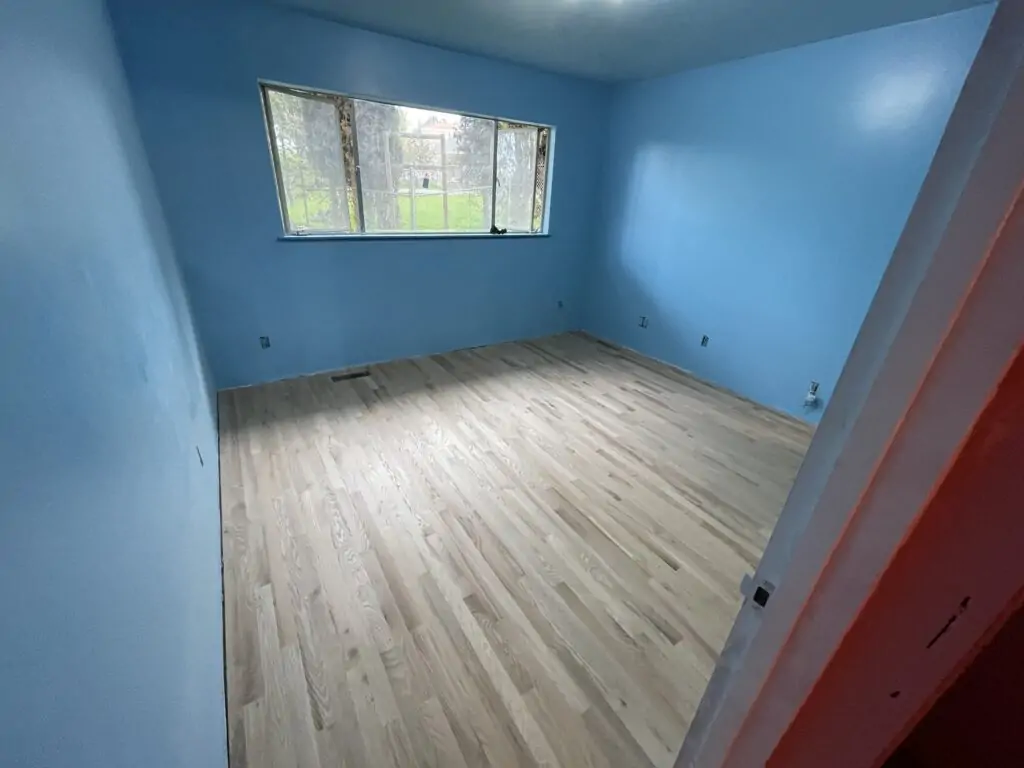
A finished hardwood floor sheds liquid on the surface. The seams between boards don’t.
Urine runs into the joints, soaks into the sides and undersides of the boards where there’s no finish at all, and keeps going into the subfloor beneath. By the time it’s noticeable, the contamination is usually in three places at once: the finish, the wood, and what’s underneath.
That’s why mopping and cleaning products stop working. They’re treating the top of a board that’s contaminated from the edges down.
This is what separates hardwood work from everything else we do.
A subfloor gets rough preparation, because something is going over it. Hardwood stays visible. It has to come out of this looking like a floor — so the sanding, the coating, and the finish all have to be done to a finish-ready standard, not a construction standard.
The floor is sanded to a finish-ready level — considerably more carefully than plywood prep, where the surface only needs to be clean and open.
We apply our clear-coat Odor Encapsulator, formulated for hardwood flooring. It treats the odor source and stays clear over the wood.
After the first clear coat, the floor is sanded again before the next, the way any quality floor finish is built up.
The Odor Encapsulator has a naturally high-gloss finish. If you want something softer, we apply a compatible finish coat in the sheen you choose — satin, for example.
The result: a treated floor that’s ready to use, without needing a separate refinishing job afterward in most cases.
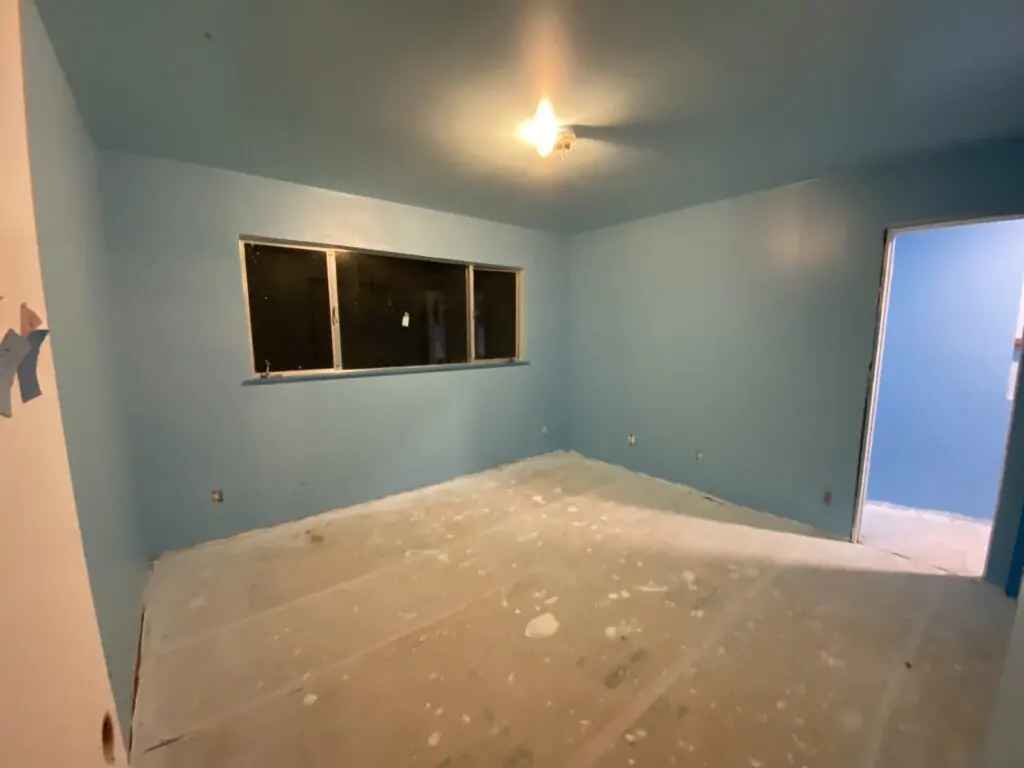
The pet odor inspection tells you whether the floor can be saved — before anyone starts pulling boards.
Newer hardwood, or flooring with a strong intact protective finish. There may be a less invasive option first. See below.
Urine into the boards and finish, subfloor underneath sound. Dry, sand, clear-coat, finish.
Urine through the boards into the subfloor and sometimes the framing. The affected flooring comes up so the structure underneath can be treated.
Everything starts with the inspection: forensic UV black light to find contamination that isn’t visible, and moisture testing to show whether the wood or anything beneath it is still wet. Wet flooring and framing are dried with professional equipment before any treatment, because sealing over moisture is one of the main reasons a previous attempt failed.
On newer hardwood or flooring with a strong intact protective finish, a modified oxidizing treatment or dry solvent-based treatment may sometimes be attempted before moving to sanding and clear-coat encapsulation.
When the odor is deeper, persistent, or has traveled through the seams, the treatment on this page is the more appropriate path. The lighter options are covered on our oxidizer urine odor treatment page, and they aren’t covered by the 5-year guarantee.
In some cases only certain planks are badly urine-damaged and need to come out. How those get replaced makes a visible difference in the finished floor.
Rather than scattering brand-new planks through the middle of the room, we may take sound existing boards from one side of the room and use them as donor planks to repair the damaged areas. Those older boards are usually closer in thickness to the surrounding floor — especially after sanding — so the repairs blend more evenly.
The new replacement hardwood then goes in together along the side of the room where the donor boards came from. Because the new boards are grouped in one area, they can be sanded down together to match the height of the existing floor.
The result is a cleaner, more even repair than installing thicker new boards at random throughout the room and spot-sanding each patch individually.
Sometimes the hardwood can’t be saved in place.
When urine has gone through the boards into the subfloor, or the boards are cupped and saturated past treatment, the flooring is removed so the structure underneath can be treated directly. Once the subfloor is exposed, it’s prepared, dried, and sealed the same way as any other structural surface — and where urine has reached the joists, those are treated too. See our subfloor odor sealing page.
About re-use. In some cases hardwood can be taken up and treated for re-use. We can’t guarantee every board will be reusable, since some break during removal.
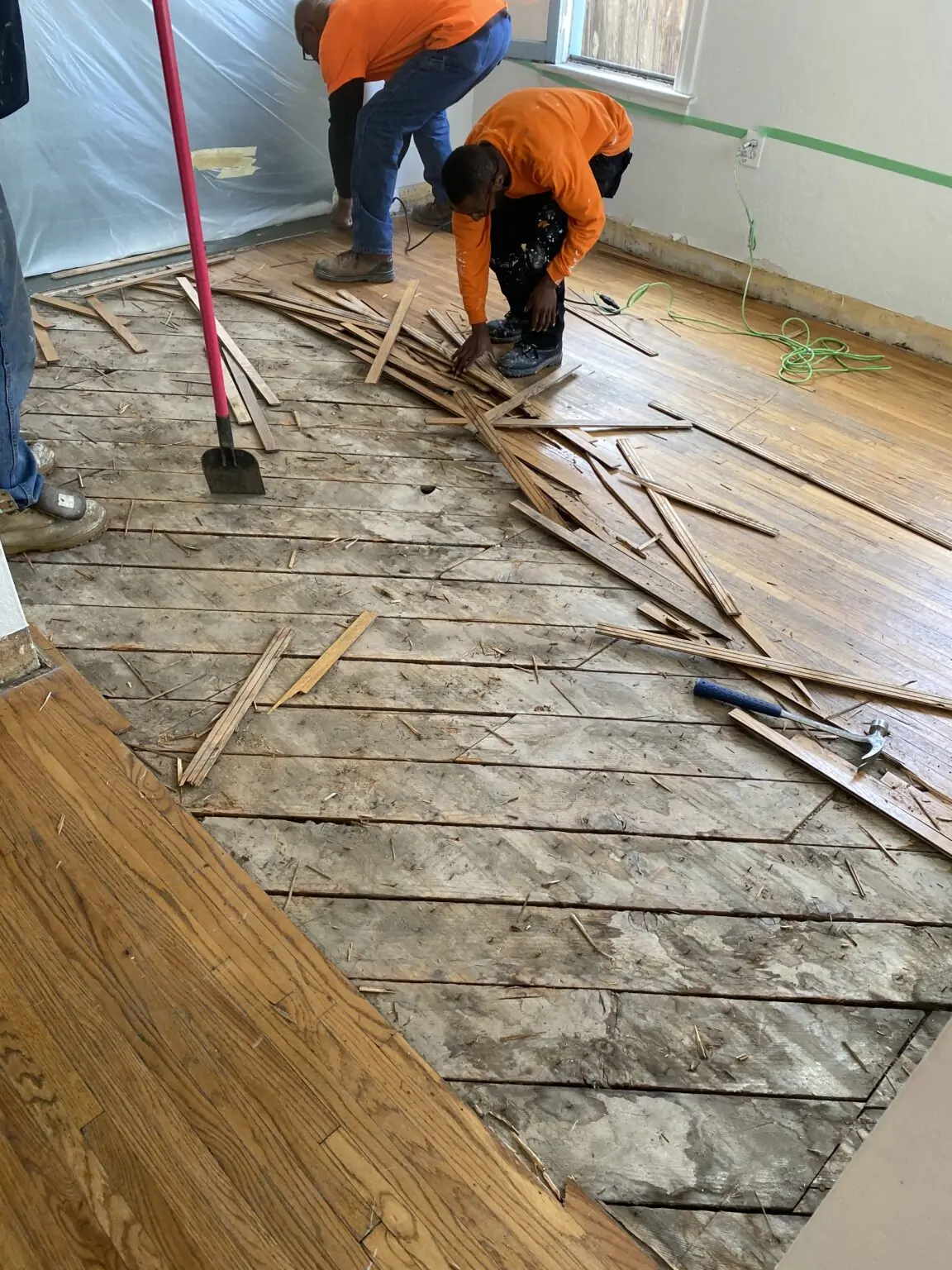
Pet urine, including dog urine, leaves dark or black staining where it has soaked into the wood and reacted over time.
Sanding removes staining within the depth the sanding reaches. Staining that has gone deeper into the board, or through to the subfloor below, may remain — and in those cases the board usually needs to come out and be replaced using the donor-plank method above. The inspection gives you a realistic read before work starts, rather than a promise that every stain will disappear.
Hardwood flooring properly prepared and treated with our clear-coat Odor Encapsulator System is covered by our 5-Year Odor-Free Guarantee.
If the original pet urine odor returns from those treated surfaces due to the same contamination we remediated, we return and re-treat at no additional charge during the guarantee period.
The guarantee doesn’t cover new pet accidents, untreated areas, concealed materials the customer elected not to expose, or work performed by others. Lighter oxidizing or solvent treatments applied to preserve a floor in place are not covered.
Often, yes. When the contamination is in the boards and finish and the subfloor is sound, the floor can usually be dried, sanded, treated, and finished. Where urine has gone through into the subfloor, the affected flooring normally needs to come up.
In most cases, no. The treatment is finished to a presentable level — sanded, clear-coated, sanded between coats, and finished in the sheen you choose.
The Odor Encapsulator has a naturally high-gloss finish. If you want something softer, we apply a compatible finish coat in the sheen you prefer, such as satin.
Yes. Hardwood properly prepared and treated with our clear-coat Odor Encapsulator System is covered by the 5-Year Odor-Free Guarantee. Lighter oxidizing or solvent treatments are not.
Sanding removes staining within the depth it reaches. Deeper staining may remain, and those boards usually need to be replaced — which is where the donor-plank method comes in.
We may use sound boards from one side of the room to repair the damaged areas, then install the new replacement hardwood together along that side so it can be sanded to match the existing floor height. It blends far better than scattering new boards through the middle of the room.
Refinishing addresses the surface. If urine has soaked into the sides and undersides of the boards or into the subfloor, a new finish seals over the source rather than treating it.
Then the affected hardwood comes up so the subfloor can be prepared, dried, and sealed directly.
Before you refinish or replace a hardwood floor, find out how far the urine actually went. The inspection tells you whether the floor can be saved and what it will take.
Serving California since 1989·5-Year Odor-Free Guarantee on treated hardwood
DOG URINE
CAT URINE
ANIMAL URINE
URINE STAIN
ODOR SEALER