Urine smell in your tile or grout? You may not have to tear it out. We treat ceramic, porcelain, natural stone, and pavers in place when the floor can be saved.
Serving California since 1989
Tile gets a reputation as the easy floor for pets. It’s hard, it wipes clean, and urine sits on top — or so it seems.
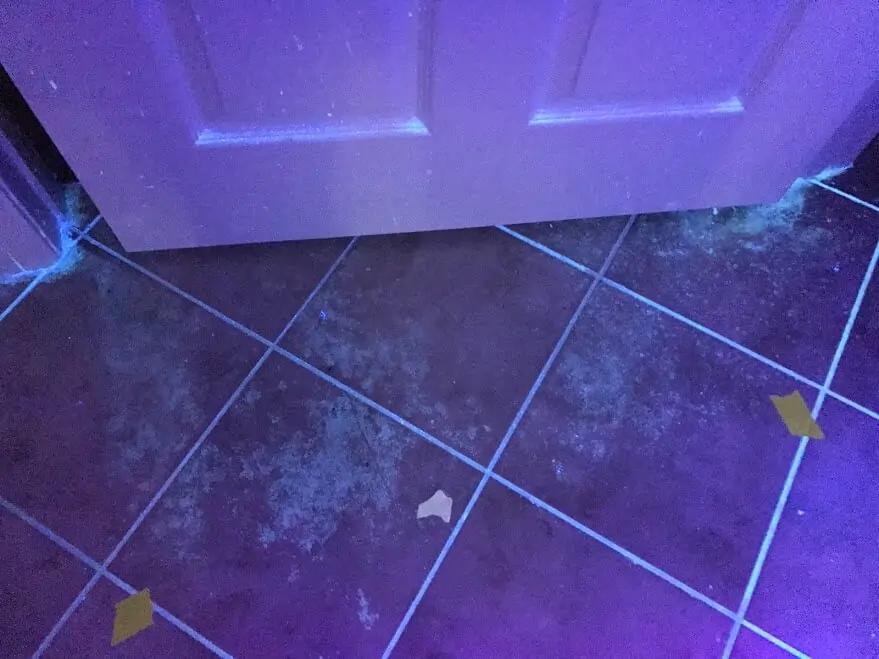
The tile itself may shed urine. The grout doesn’t. Grout is porous, and every grout line is a path down to the mortar bed and the slab or subfloor underneath. Natural stone and pavers are porous through the body of the material. Over months and years of accidents, urine soaks into the grout, into porous tile and stone, and in severe cases into what’s below.
That’s why a tile floor can look spotless and still smell — and why mopping, steam cleaning, and grout cleaners bring it back instead of getting rid of it.
Most people assume urine in a tile floor means tearing it out. Often it doesn’t. What we recommend depends on:
The inspection tells us both — and which path fits your floor.
The pet odor inspection determines it — before anyone recommends tearing anything out.
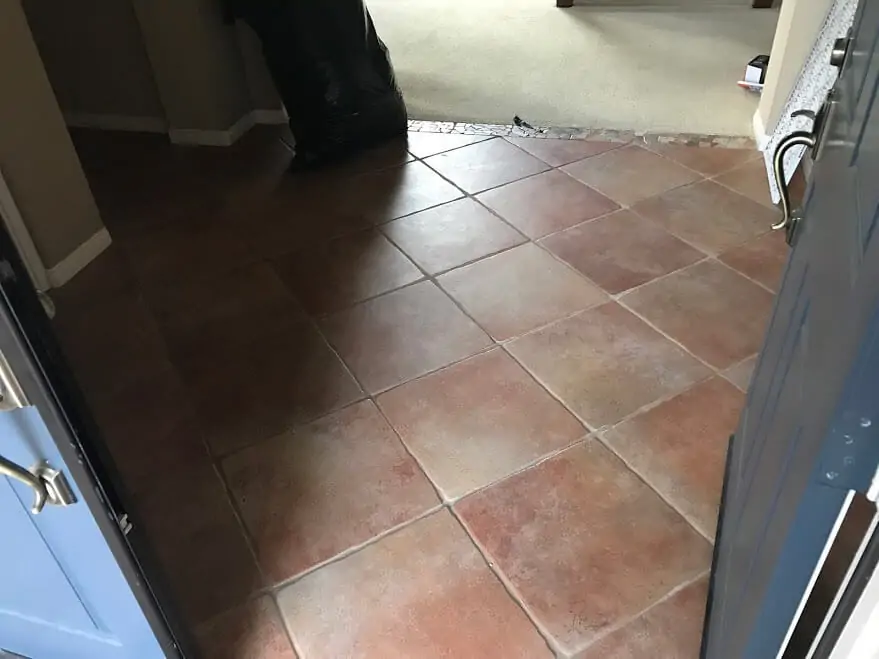
For ceramic, porcelain, and natural stone installed over a concrete slab, our soak treatment is the option that lets you keep the floor.
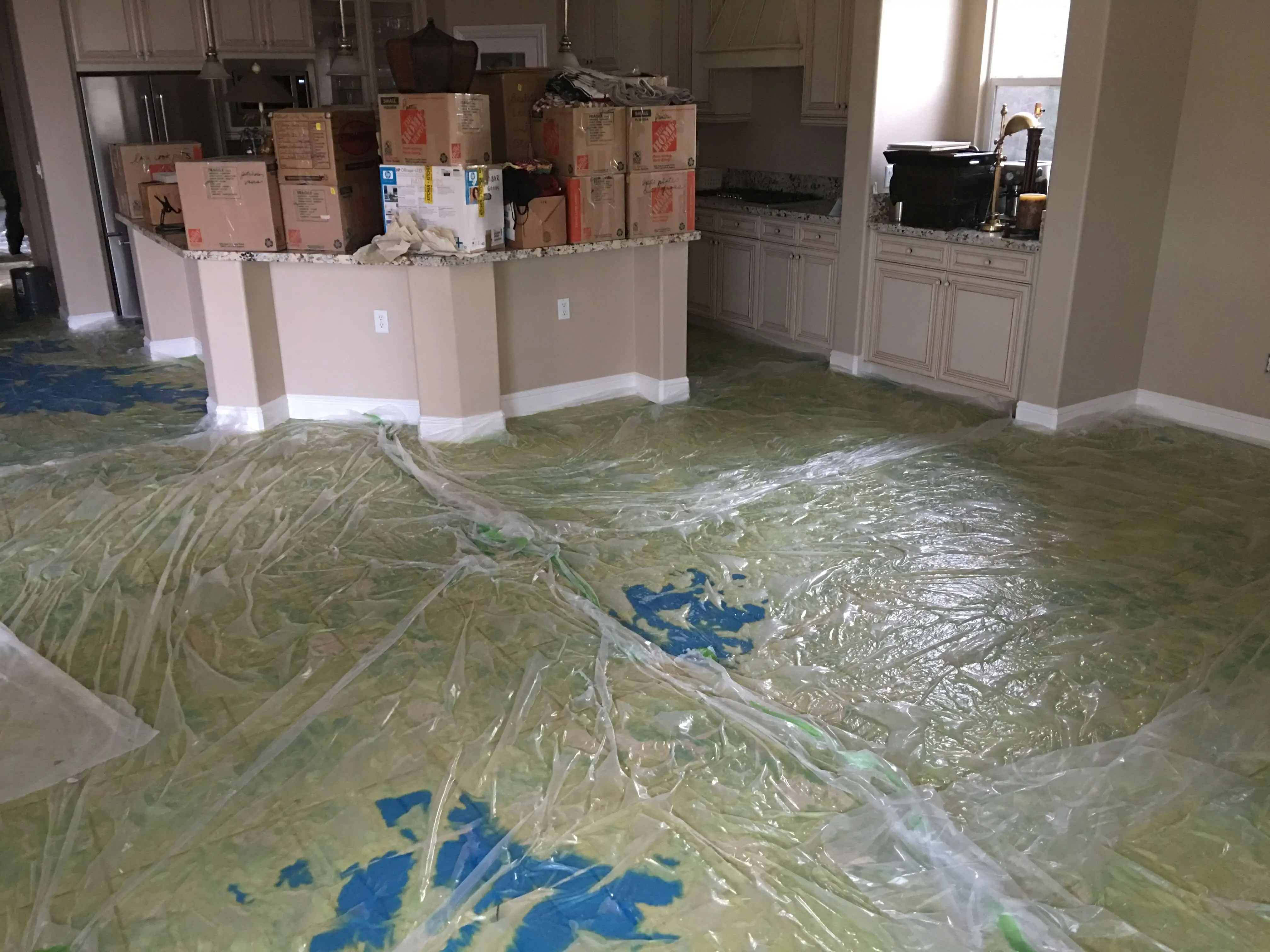
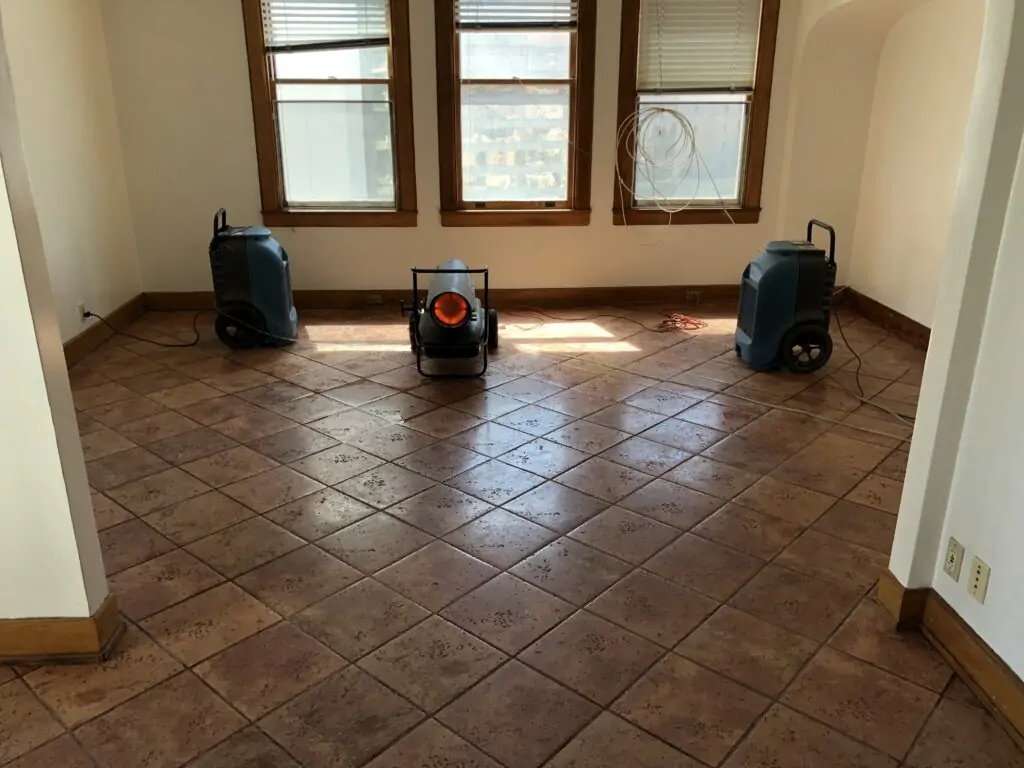
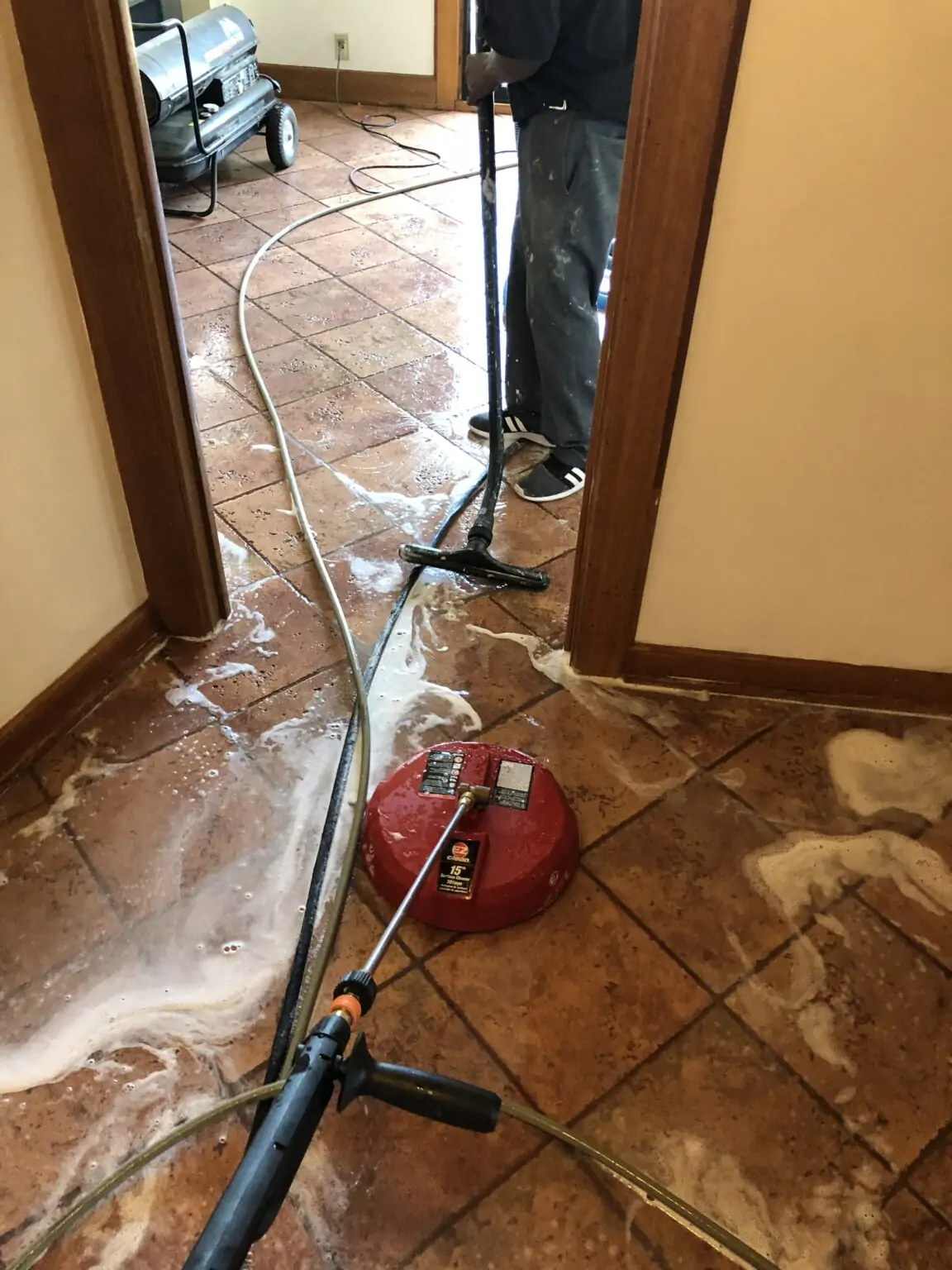
We drench the tile floor with a powerful oxidizer that penetrates down into the grout and treats the urine where it has soaked in. Then we let it dwell. Standard treatment is 24 hours. Severe and extreme cases get 48 or 72 hours — that dwell time is what lets it reach the contamination rather than just the surface.
Once the soak is complete, the tile and grout are thoroughly cleaned and rinsed. Grout sealing is available as an additional service afterward if the grout needs it.
As a rule, the soak treatment is used on tile installed over a concrete slab. We generally don’t use it on raised foundations or second floors, where there’s a wood subfloor under the tile — those floors are usually handled differently. See “When the Tile Has to Come Out” below.
The soak treatment is very effective, but it isn’t covered by our 5-Year Odor-Free Guarantee. It’s the option for keeping your existing floor — and you’ll know that trade-off before we start.
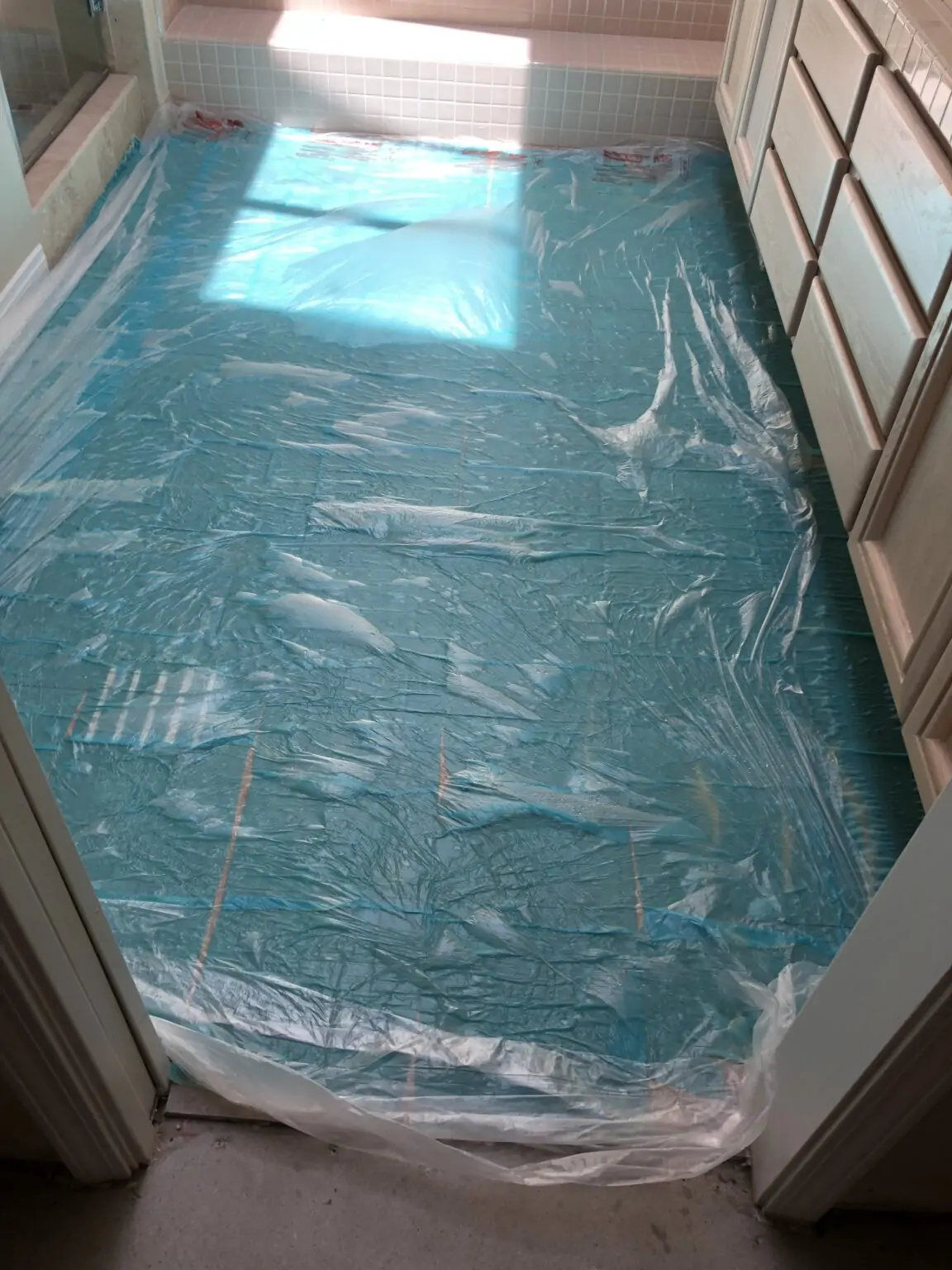
Porous or unsealed natural stone absorbs urine into the body of the stone, not just the grout. For these floors there’s no single rule — we decide case by case after the inspection.
Depending on the stone, its condition, and how deep the contamination goes, we’ll recommend either the soak treatment or sealing with our Odor Encapsulator. If the stone is sealed with the encapsulator, it carries our 5-Year Odor-Free Guarantee; if it’s soak-treated, it doesn’t. You’ll know which we recommend, and why, before any work begins.
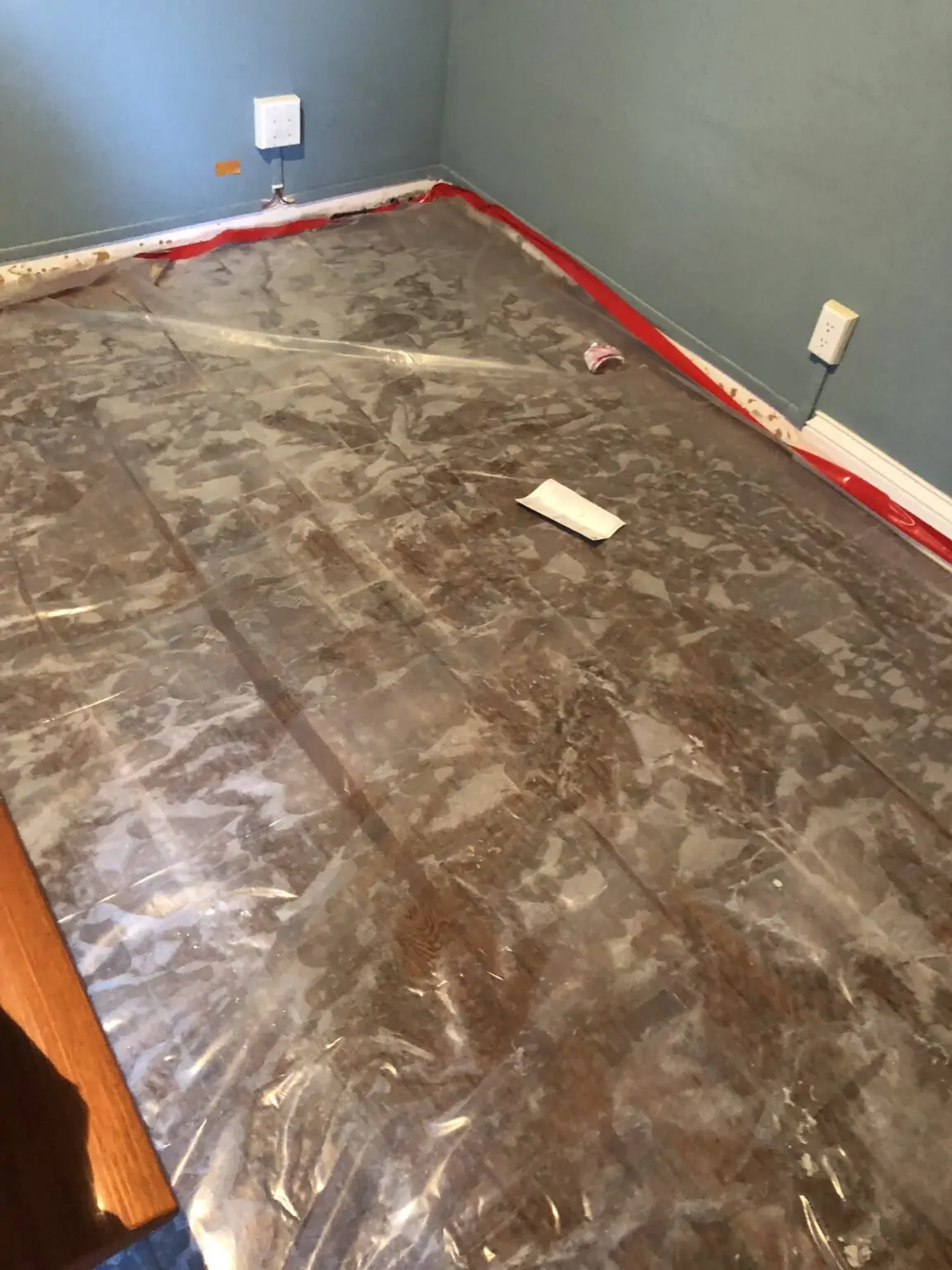
Clay pavers — including Spanish and Mexican pavers — and concrete pavers are among the most urine-absorbent floors in any home. The urine goes into the body of the paver, not just the grout.
For pavers, we clean and prepare the surface, then seal with our Odor Encapsulator. It gets the odor source contained while preserving the pavers themselves.
Paver floors treated with the Odor Encapsulator carry our 5-Year Odor-Free Guarantee. It applies to qualifying surfaces properly prepared and treated with the Odor Encapsulator System, and doesn’t cover new pet accidents, untreated areas, or work performed by others.
Some floors can’t be saved in place.
On raised foundations and second floors, the tile sits on wood. When urine has soaked through the grout into that subfloor, the tile usually needs to come up so the subfloor can be treated directly. As a rule, we don’t soak-treat these floors.
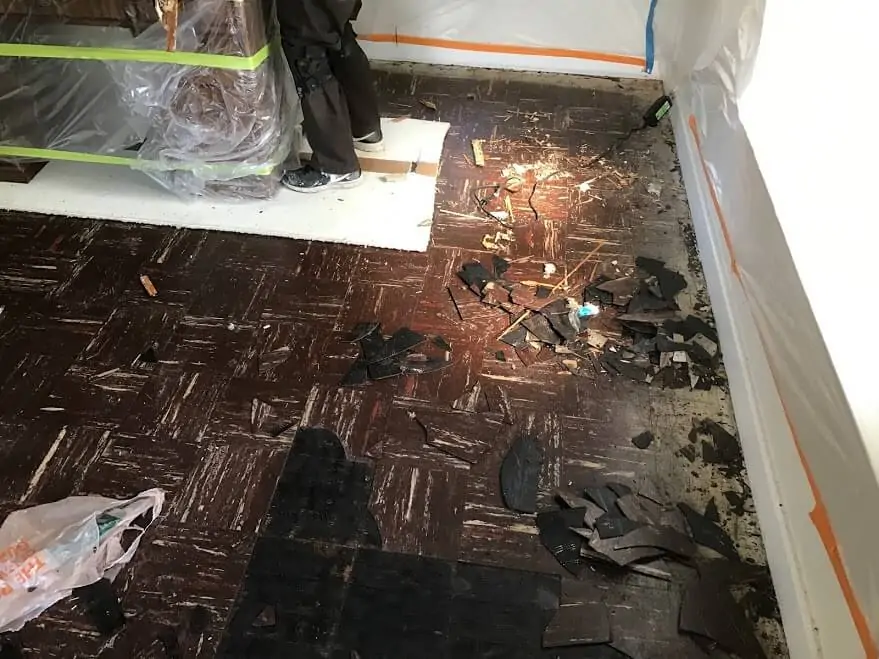
Even on a slab, when tile or stone is severely damaged and urine has penetrated through to the concrete underneath, we recommend removing the flooring. At that point the odor source isn’t the tile — it’s the slab, and it has to be treated directly.
Signs it’s gone that far:
Once the tile is up, the concrete or subfloor underneath gets the same treatment as any other structural surface — prepared, dried, and sealed. See our concrete urine odor removal and subfloor odor sealing pages.
Most people have tried several products on a tile floor before they call.
Mopping, steam cleaning, grout cleaners, and enzyme products all work on the surface — and on a fresh accident, that’s often all you need. Once urine has soaked into grout and porous tile, they’re working on the wrong layer. Steam and heavy mopping can also push moisture back into the grout and reactivate what’s there, which is why the smell often seems worse right after cleaning.
Right tools for surface cleaning. The contamination is below the surface.
We also seal brick patios, porches, and fireplace brick (excluding the firebox), which protects the surface while keeping its appearance.
Often, yes. If the room being treated can be isolated and sealed off with a containment barrier, you can remain in the home. The treated area needs to stay clear during the process. We’ll give you specific guidance based on which treatment your floor needs.
Often, no. Ceramic, porcelain, and natural stone over a concrete slab can usually be treated in place with our soak treatment, and clay and concrete pavers with the Odor Encapsulator. Removal is usually recommended when urine has reached the subfloor or concrete underneath, or when contaminated tile is over a wood subfloor.
24 hours is standard. Severe and extreme cases get 48 or 72 hours.
As a rule, no. The soak treatment is generally used on tile over a concrete slab. Tile on raised foundations or second floors sits on a wood subfloor, so those floors are usually evaluated for removal and subfloor treatment instead. The inspection determines what’s right for your floor.
The soak treatment reaches into the grout, and the tile and grout are cleaned and rinsed afterward. Grout sealing is available as an additional service.
No. It’s very effective and lets you keep your existing floor, but it isn’t covered by our 5-Year Odor-Free Guarantee. Pavers treated with the Odor Encapsulator are covered.
Yes — Spanish, Mexican, and other clay pavers, as well as concrete pavers. They’re cleaned, prepared, and sealed with our Odor Encapsulator. Clay flooring that’s staying in place and isn’t being sealed can be soak-treated instead.
We decide case by case after the inspection. Depending on the stone and how deep the contamination goes, it may get the soak treatment or be sealed with the Odor Encapsulator.
If the treated room can be isolated with a containment barrier, yes. The treated area needs to stay clear during the process.
Before you tear out a tile floor, find out whether it can be saved. The inspection identifies your tile type, what it’s installed over, how far the urine has gone, and which treatment fits.
Serving California since 1989
GROUT URINE ODOR REMOVER
HUMAN URINE ODOR REMOVER
SPANISH TILE URINE ODOR REMOVER
CLAY TILE URINE ODOR REMOVER
STONE TILE URINE ODOR REMOVER