

Oxidizer Treatment
Oxidizer Urine Odor Treatment
Want to get rid of the urine odor without tearing out the floor? Our oxidizer soak treats urine where it has soaked in — often while keeping the tile, stone, LVP, or turf you already have.
Serving California since 1989

Two Ways We Treat Urine Odor
We have two treatments, and they do different jobs.
The Odor Encapsulator is a coating
It's applied to structural surfaces — subfloors, concrete, framing, drywall — after they've been prepared and dried, and it seals the odor source in place. Surfaces treated with it carry our 5-Year Odor-Free Guarantee. See our Odor Encapsulator Sealer page.
The oxidizer treatment is a soak
A powerful oxidizing solution is applied heavily enough to penetrate where the urine has gone — into grout, seams, turf, or soil — and treat it there. The treatment does not leave an encapsulating coating, allowing the existing surface to remain in place when conditions allow.
Neither is better in every case. The right one depends on the material, what's underneath it, and whether you want to keep the existing surface.
When We Use the Oxidizer Instead
- You want to keep the floor. Tile, natural stone, and LVP over a slab can often be treated in place instead of removed.
- A coating would change how it looks. Stained, polished, or decorative concrete keeps its appearance.
- The material can't be coated. Artificial turf and crawlspace soil aren't surfaces you seal — they're treated by soaking.
- You're choosing between cost and guarantee. It can be the less invasive route, and the trade-off is the guarantee.
Why It Isn't Guaranteed
The oxidizer treatment is very effective, but it isn't covered by our 5-Year Odor-Free Guarantee. The guarantee applies to qualifying structural surfaces that are properly exposed, prepared, and treated with the Odor Encapsulator System.
So you choose: keep the existing surface without the written guarantee, or remove it and encapsulate what's underneath with the guarantee. We'll tell you which we'd recommend for your situation, and why, before any work begins.
Not sure which treatment fits your floor?
The pet odor inspection determines it — material, what's underneath, and how far the urine has gone.
Tile and Natural Stone
Ceramic, porcelain, and natural stone installed over a concrete slab are the most common oxidizer jobs. The tile itself may shed urine, but the grout doesn't — every grout line is a path down to the mortar bed and the slab.
We drench the floor so the solution penetrates the grout and treats the urine where it has soaked in, then let it dwell. Once the soak is complete, the tile and grout are cleaned and rinsed. Grout sealing is available afterward.
As a rule, we soak-treat tile over a concrete slab — not tile on raised foundations or second floors, where there's a wood subfloor underneath. See our tile floor urine removal page.
LVP — "Waterproof" Flooring Isn't
Luxury vinyl plank is sold as waterproof flooring. The planks may be. The floor isn't.
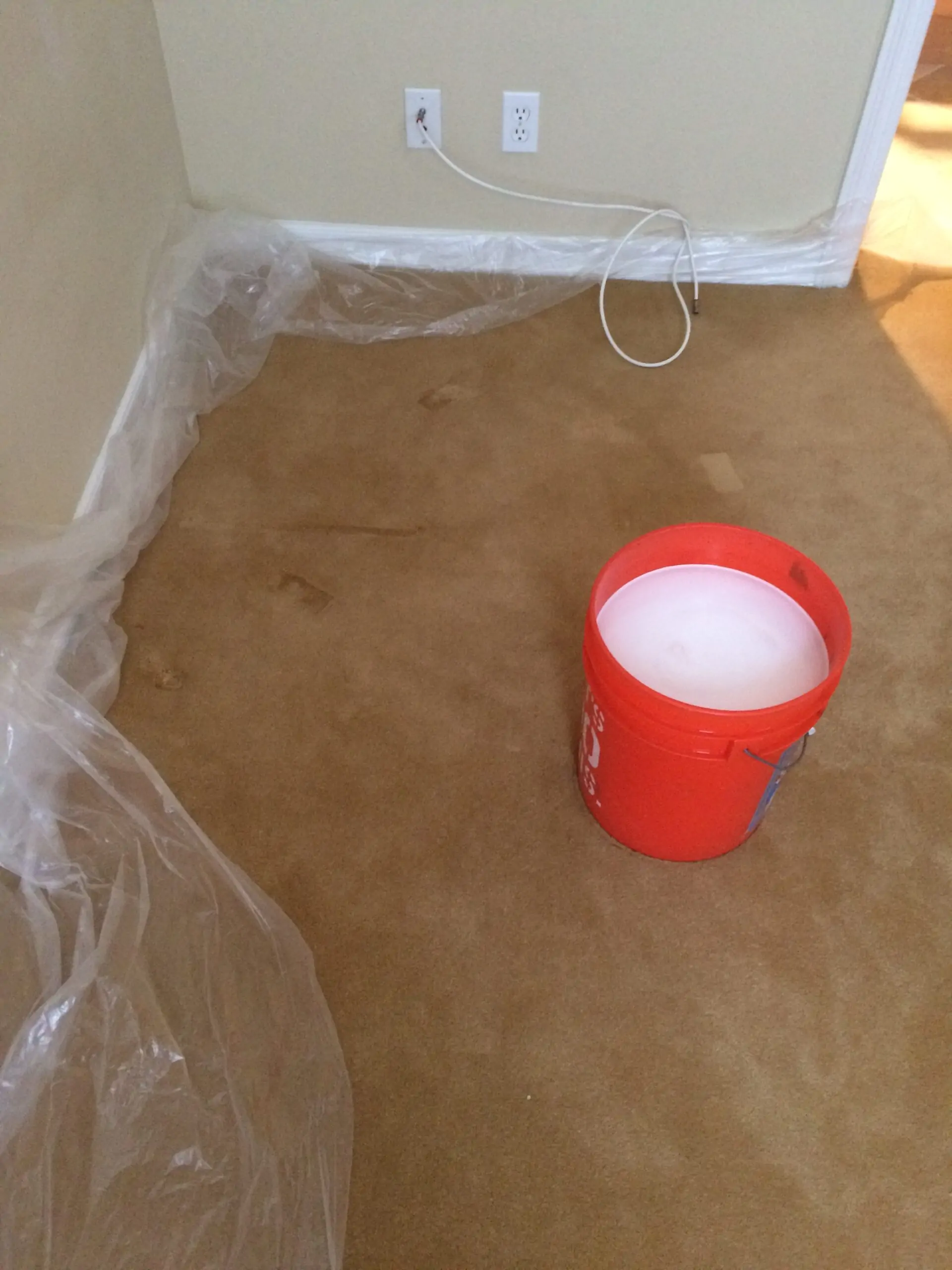
When we pull up LVP in homes with pets, we regularly find areas where urine has gone straight through the seams between planks and stained the floor underneath. Once urine is under the planks, cleaning the surface can't reach it.
Soaking LVP in place
For LVP installed over concrete, an oxidizing treatment can sometimes be applied with the flooring in place. The solution can enter through seams and edges, but because the flooring remains installed, we cannot directly verify how evenly it reaches contamination underneath.
The catch
We have no way of knowing how tight the seams are, or how much urine is underneath, without pulling the flooring up first.
Heavy or severe damage
When there's heavy to severe urine damage on LVP, the safer assumption is that urine has reached the floor underneath. With cats spraying, it runs down the wall and in from the sides at the edges of the flooring. With large dogs urinating on the floor, it goes straight down through the seams from the top. At that level, the LVP may need to be removed so the substrate can be treated directly.
Lifting the planks
The other option is to pull up the LVP and soak-treat the planks directly. That reaches everything — including the floor underneath. We can't guarantee every plank will be reusable, since some break during removal, and reinstallation is normally handled by your flooring contractor. On smaller jobs we can reinstall it ourselves.
The inspection helps you weigh the two.
Laminate. Laminate is usually removed. Its fiber core absorbs urine, and like LVP, urine gets between the joints and under the flooring where we can't confirm what's there without lifting it.
Hardwood
For lighter hardwood contamination. On newer hardwood or flooring with a strong intact protective finish, a modified oxidizing treatment or dry solvent-based treatment may sometimes be attempted before moving to sanding and clear-coat encapsulation.
The oxidizing solution is applied with a sponge mop and allowed a shorter dwell — typically 15 to 30 minutes, or 1 to 2 hours depending on the material and the odor level.
When the odor is deeper, persistent, or has traveled through the seams, our hardwood floor odor removal service is the more appropriate treatment path — finish-level sanding, clear-coat Odor Encapsulator, sanding between coats, and your choice of final sheen. That service is covered by the 5-Year Odor-Free Guarantee; the lighter treatments on this page are not.
Laminate
Laminate is usually removed. The fiber core absorbs urine, and the bigger issue is the same one LVP has: urine gets between the joints and under the flooring, where no surface treatment reaches it.
A modified application is available as an option with the flooring in place, but we don't guarantee the results — with the floor still down, we can't confirm whether urine has soaked underneath.
The other option is to take it up and soak-treat it for re-use. We remove the laminate, soak-treat the planks, and treat the subfloor underneath. Two things to know: we can't guarantee every piece will be reusable, since some break during removal, and reinstallation is normally handled by your flooring contractor. On smaller jobs we can reinstall it ourselves.
Walls — Surface Cleaning, Odor, and Dander
Walls get a wipe-down application with essentially no dwell time — this is a shorter treatment than the hardwood and laminate application. It cleans the surface and is effective for pet dander as well as odor. It's a surface treatment: where urine has gone into the drywall or the framing behind it, that's structural work. See our drywall urine odor removal page.
Artificial Turf
Artificial turf is treated in place. Dogs use the same patch of turf daily, and urine soaks through the backing into whatever is underneath. Rinsing the surface doesn't reach it.
The turf is soaked with the oxidizer so the solution can penetrate through the turf and into the contaminated material below. We then cover it with plastic sheeting, so the sun doesn't evaporate the solution before it's done its job — the covering keeps it working through the full dwell time.
Crawlspace Soil
In crawlspaces, the contamination is often in the soil itself — from pets, strays, or rodents living under the house.
First, removal
Loose contamination, including feces, is removed.
Then, the soak
The contaminated soil is treated with the oxidizer. Standard treatment is 24 hours; severe and extreme cases get 48 or 72 hours. It's the initial treatment for crawlspace soil. Under the house, the soil doesn't need to be covered — there's no sun to evaporate it.
Plan to be out overnight
Urine that has been under a house for years breaks down into highly concentrated compounds, and many crawlspaces have been treated with other products before. The oxidizer can give off stronger-than-usual odors while it works on all of that. We prefer no occupancy at least overnight while the initial treatment is underway. The odor usually subsides overnight; in severe to extreme cases where a final dose is needed, plan on one extra night. Longer if anyone is sensitive to strong disinfecting or sanitizing odors.
Footers and retaining walls
While we're under the house, we inspect the concrete footers and retaining walls for cat spray and urine contamination. Where we confirm cat spray on them, we generally recommend the Odor Encapsulator first, since that's the treatment the guarantee covers. They can also be saturated with the oxidizer.
The soak can be followed by optional crawlspace encapsulation — a 20-mil odor barrier over the soil — and sealing air gaps in the subfloor. See our crawlspace odor removal page.
Exterior Concrete and Masonry
For concrete and masonry that stays exposed — patios, walkways, dog runs, garage aprons, and areas with repeated human urine contamination — an oxidizing treatment can be used where a coating isn't wanted. See our concrete urine odor removal and human urine odor removal pages.
What Happens During a Soak
- Inspection. We confirm the material, what's underneath, and how far the contamination has gone.
- Removal of loose contamination where it applies — feces, debris, soiled material.
- Application. The oxidizing solution is applied heavily enough to penetrate where the urine went.
- Dwell. The solution is left to work. Outdoors, artificial turf is covered with plastic sheeting so the sun doesn't evaporate it.
- Cleaning and rinsing on tile and stone once the dwell is complete.
- Optional grout sealing on tile.
The treated area needs to stay clear during the process. For interior floors, if the room can be isolated with a containment barrier, you can usually stay in the home. Crawlspace soil treatment is different: plan for people and pets to be out at least overnight, and one extra night in severe to extreme cases.

How Long It Takes
- Full soak — tile, stone, LVP, turf, patios, dog runs, soil: 24 hours is standard. Severe and extreme cases get 48 or 72 hours.
- Modified application — hardwood and laminate: 15 to 30 minutes, or 1 to 2 hours, depending on the material and the odor level. On laminate this is optional and not guaranteed.
- Wall wipe-down: essentially no dwell time.
What the Oxidizer Doesn't Replace
- Subfloor contamination. When urine has gone through to a wood subfloor, the subfloor needs to be exposed, prepared, and sealed. See our subfloor odor sealing page.
- Framing and drywall. Structural materials are encapsulated, not soaked.
- Laminate. Usually removed. An optional modified application is available but not guaranteed.
- Tile on wood subfloors. As a rule, those floors are evaluated for removal rather than soaked.
- The guarantee. If you need the 5-year written guarantee, the Odor Encapsulator is the route.
Why P.O.R.S.
- Two treatments — we recommend the one that fits the material, not the one that fits a script
- Serving California since 1989
- Tile, stone, LVP, hardwood, turf, and crawlspace soil
- Keeps your existing surface whenever that's realistic
- Forensic UV black light inspection before any recommendation
- Honest about the trade-off: surface kept, or guarantee
Questions We Get
What is the oxidizer?
A powerful oxidizing solution, applied as a soak so it reaches urine that has penetrated below the surface.
Is the oxidizer treatment guaranteed?
No. It's very effective, but it isn't covered by our 5-Year Odor-Free Guarantee. The Odor Encapsulator is.
Can you treat LVP without pulling it up?
Sometimes, over concrete. The solution can enter through seams and edges, but with the flooring installed we can't verify how evenly it reaches what's underneath. The alternative is to pull the planks, soak-treat them, and reinstall — with the caveat that some planks break during removal and may not be reusable. Reinstallation is normally your flooring contractor's job, though we can handle it on smaller jobs. With heavy or severe damage, the safer assumption is that urine has reached the floor underneath, and the LVP may need to be removed.
Isn't LVP waterproof?
The planks may be. The seams aren't always tight, and we regularly find urine that has gone straight through and stained the floor underneath.
Can you treat laminate?
Usually it's removed, because urine gets between the joints and under the flooring. We can soak-treat the laminate after removal so it can be re-used, and treat the subfloor underneath — though some pieces break during removal and may not be reusable, and reinstallation is normally your flooring contractor's job. On smaller jobs we can reinstall it. Treating laminate in place is possible but not guaranteed, since we can't confirm what's underneath without lifting it.
How long does a soak take?
24 hours is standard for a full soak. Severe and extreme cases get 48 or 72 hours. The modified application for hardwood and laminate runs 15 to 30 minutes, or 1 to 2 hours depending on the material and odor level. Wall wipe-downs have essentially no dwell time.
Can hardwood be soaked?
No. On lighter contamination — newer flooring or a strong intact finish — a modified sponge-mop application may be attempted, with a 15 to 30 minute dwell or 1 to 2 hours depending on material and odor level. It isn't guaranteed. Deeper contamination goes to our hardwood floor odor removal service, which is sanded, clear-coated, finished, and guaranteed.
Do you treat artificial turf?
Yes, in place. It's soaked, then covered with plastic sheeting so the sun doesn't evaporate the solution during the dwell time.
What about the crawlspace under my house?
We remove loose contamination, including feces, treat the soil with the oxidizer, and check the footers and retaining walls for cat spray. Plan for people and pets to be out at least overnight, and one extra night in severe to extreme cases.
Can I stay home during the treatment?
For interior floors, usually — if the treated room can be isolated with a containment barrier. For crawlspace soil, plan for people and pets to be out at least overnight, and one extra night in severe to extreme cases.
Get an Odor Inspection
Find out whether your floor can be treated in place — and which treatment makes sense for the material, what's under it, and how far the urine has gone.
Serving California since 1989