Dog smell in the house that cleaning hasn’t fixed? It may be urine in the structure, marking on walls and door jambs, or body odor in the surfaces your dog rubs against.
Serving California since 1989·5-Year Odor-Free Guarantee
Most odor advice treats pet urine as one problem. Dogs create different ones.
Cat urine is more concentrated and has a sharper initial odor. Dog urine comes in larger volume — enough to push through carpet and pad, into the subfloor or concrete, and sometimes further. Dogs, especially males, also mark vertical surfaces in ways that leave contamination most people never look for.
That’s why a home can have the carpet cleaned repeatedly and still smell like dog. The odor source may be in areas routine cleaning never reached.
It’s also why “pet urine” advice written with cats in mind often doesn’t fit. A cat problem tends to be scattered — spray on walls, corners in several rooms. A dog problem tends to be heavier and deeper in fewer places, plus marking along the wall line that gets overlooked because it’s below eye level and behind furniture.
Most of our customers have cleaned more than once before they call. These are the signs the source is deeper than the surface:
Any one of these points past the surface. Several together usually mean contamination in the structure.
Male dogs lift a leg and mark territory — indoors as well as out. They target the same kinds of spots every time:
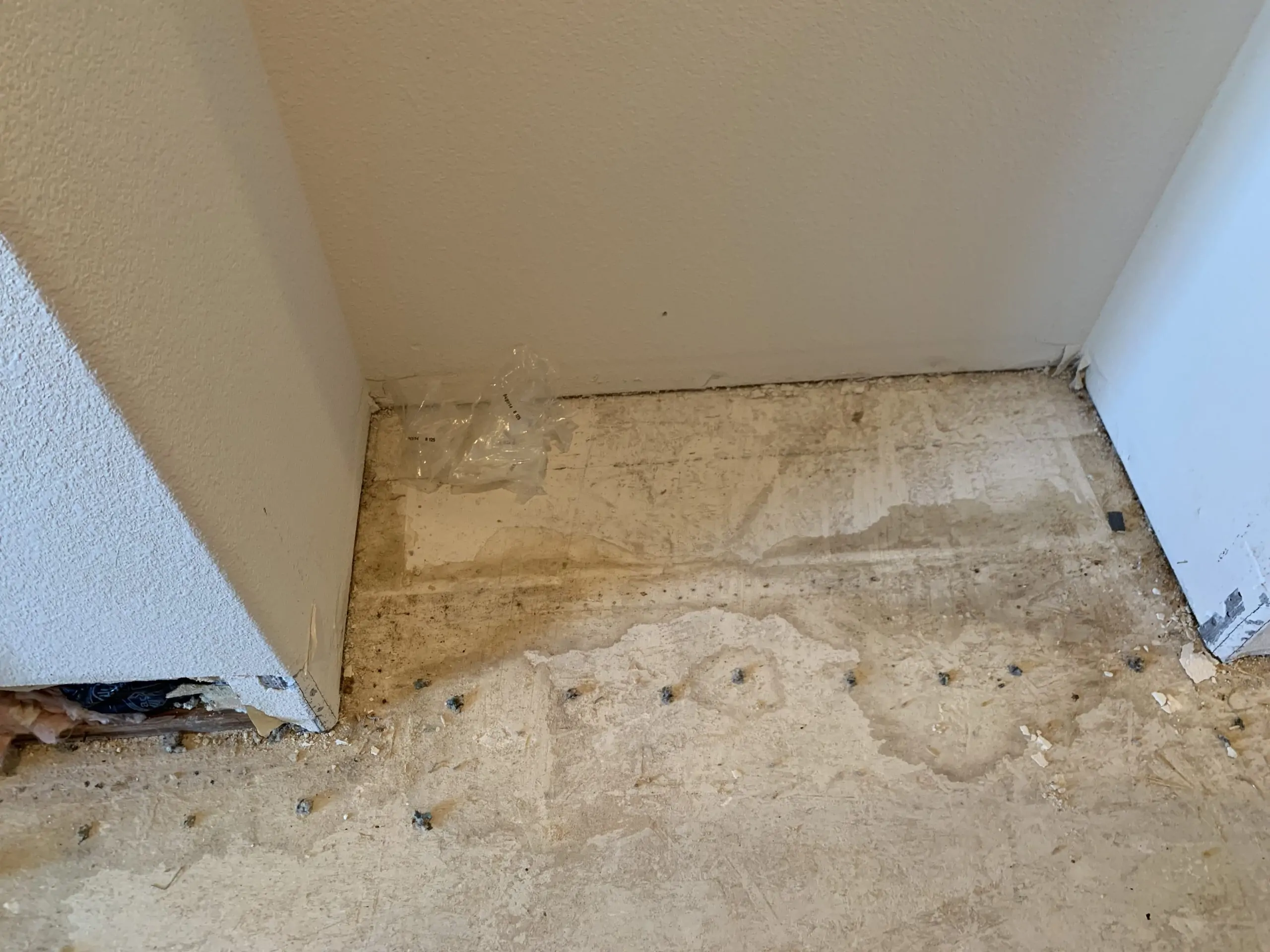
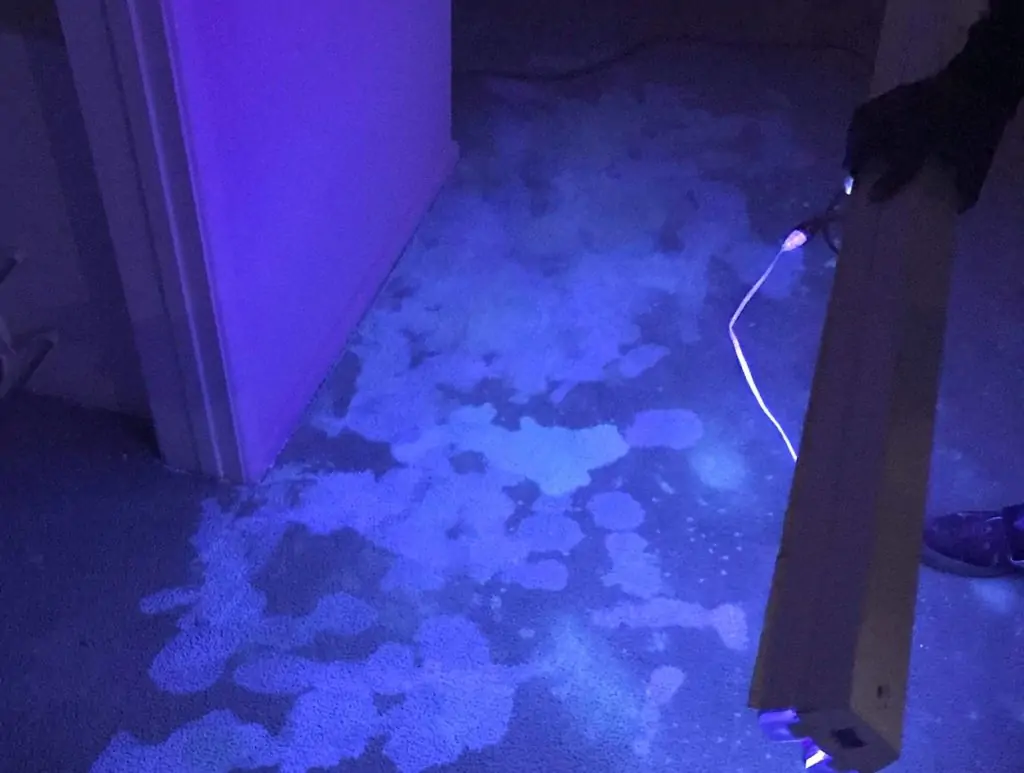
The urine hits the vertical surface, runs down, and soaks into the jamb base, the drywall behind the baseboard, and the subfloor underneath. From across the room none of it is visible. UV black-light inspection can often reveal contamination that is not visible under normal lighting — and it’s often more widespread than anyone in the house expected.
This is contamination that carpet cleaning, floor cleaning, and new flooring all miss, because none of them treat the wall line.
Most baseboards are MDF or finger-jointed pine, and both absorb liquid readily. Once urine has soaked into a baseboard, it holds odor and passes it into the drywall behind it. Swollen or stained baseboards are one of the clearest signs the wall base is contaminated. See our drywall urine odor removal page.
Jambs are raw wood at the bottom where they meet the floor. Urine that runs down a jamb soaks into the end grain, into the drywall on either side, and into the subfloor directly below the threshold. Doorways are also where dogs mark most often, so jambs are frequently the most contaminated wood in the house. When a jamb is contaminated, we remove it as needed to treat the framing behind it — your contractor installs the replacement.
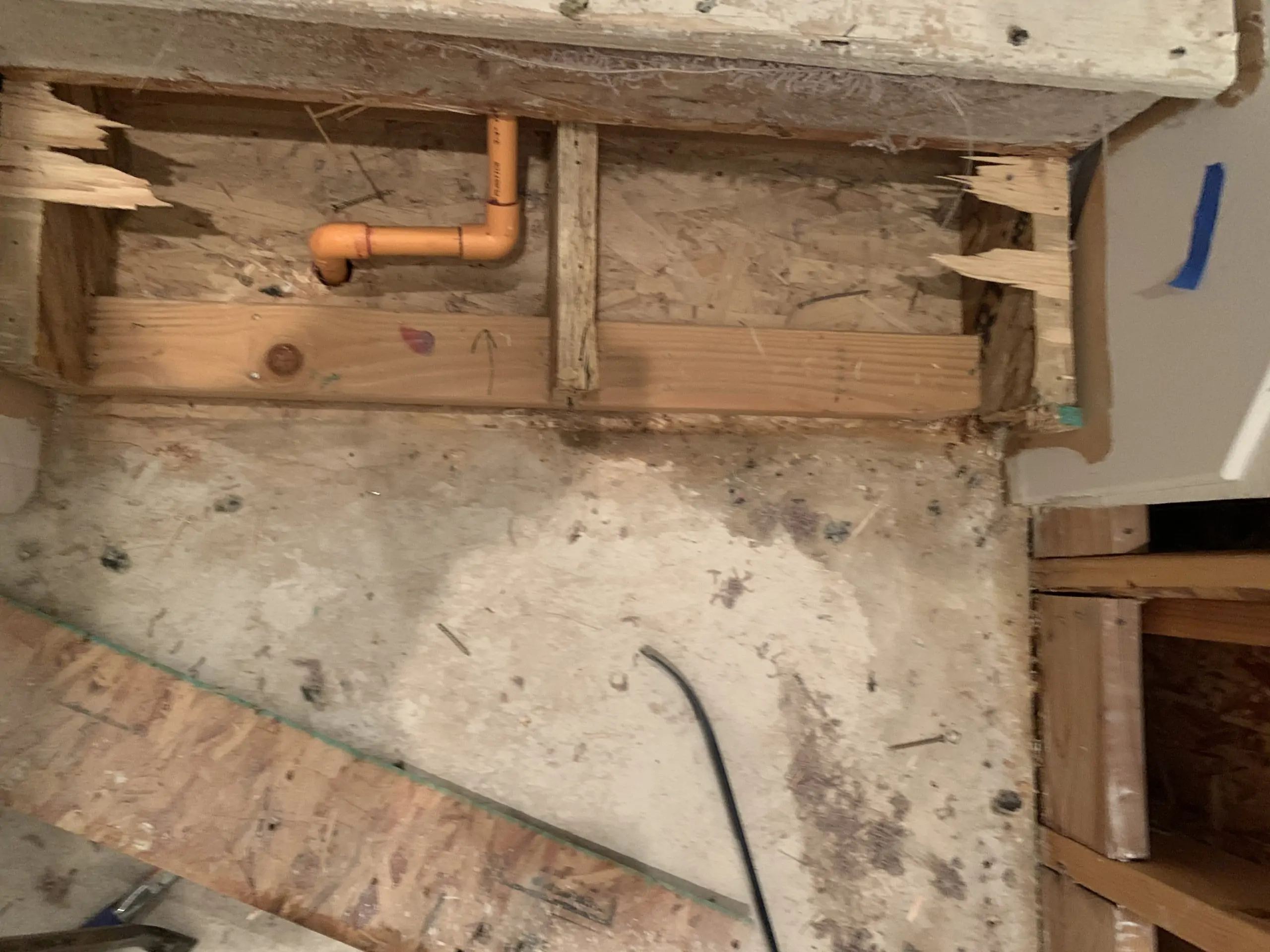
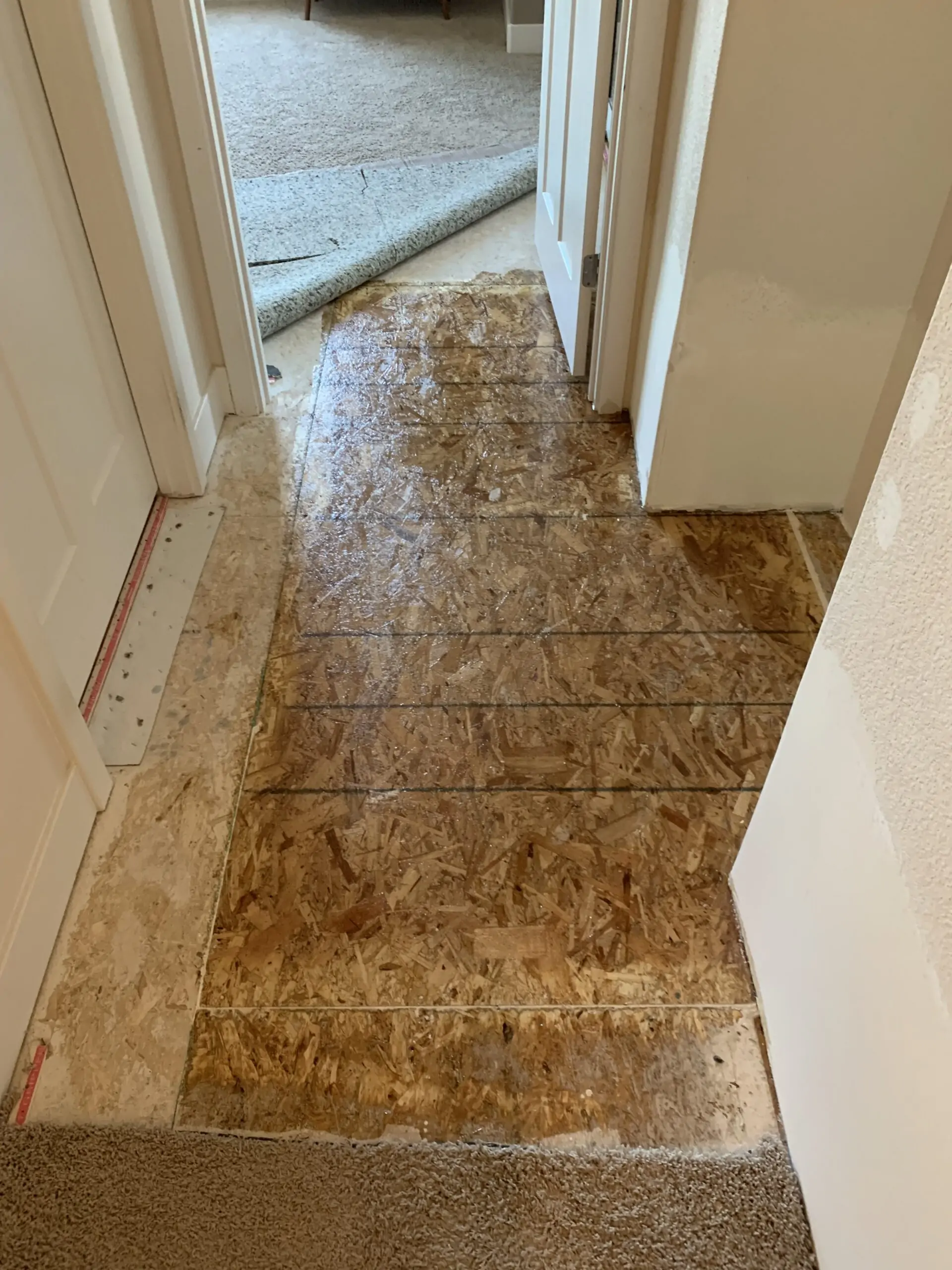
Volume matters. Over time, repeated dog urine can go past the carpet and pad, through the subfloor, and keep going.
On second floors, we’ve seen dog urine penetrate the subfloor and soak into the ceiling of the room below. The odor source for a downstairs room was an upstairs bedroom. That’s a structural odor problem — cleaning the carpet upstairs never touches it, and nobody thinks to look at the ceiling downstairs.
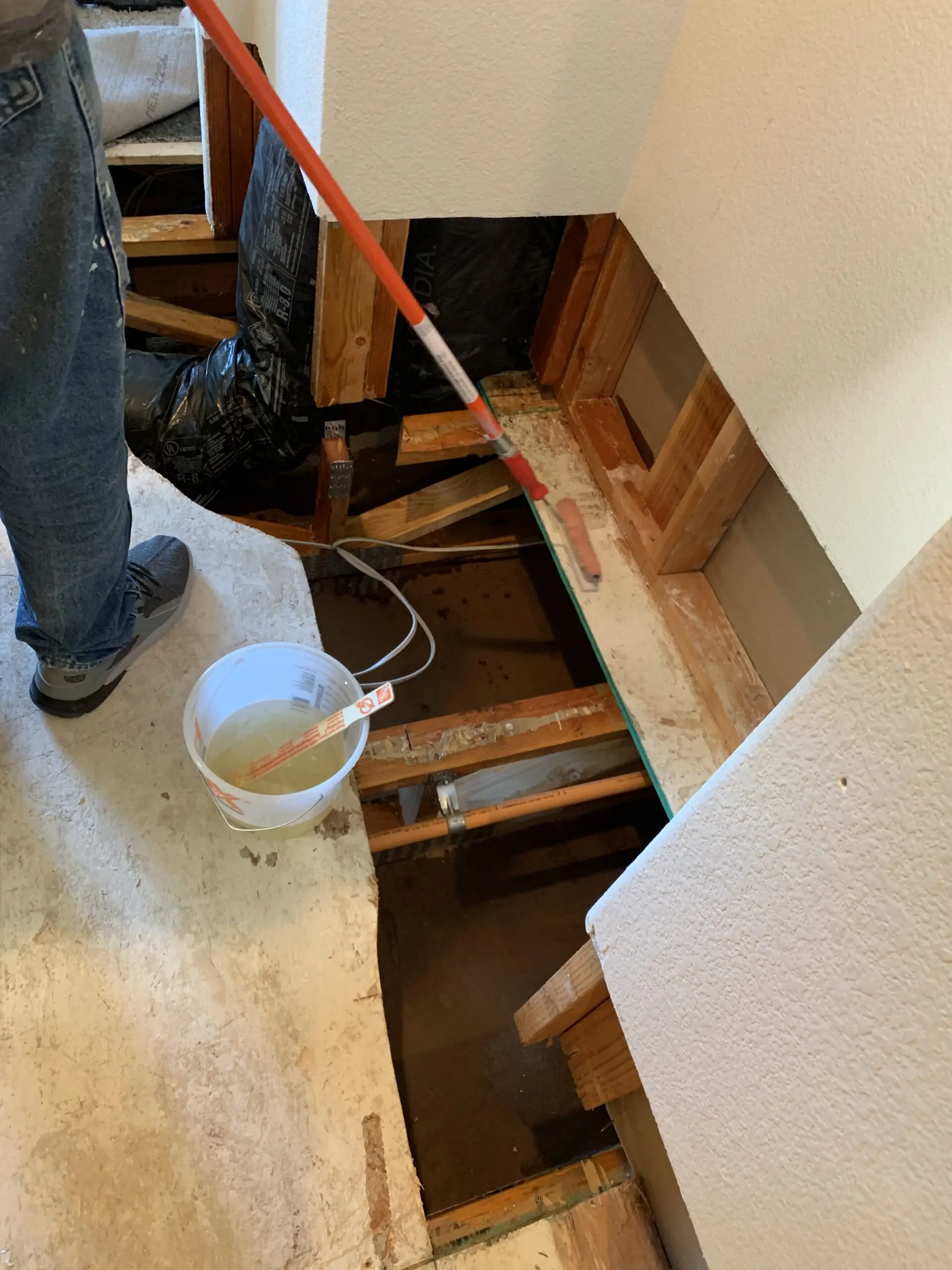
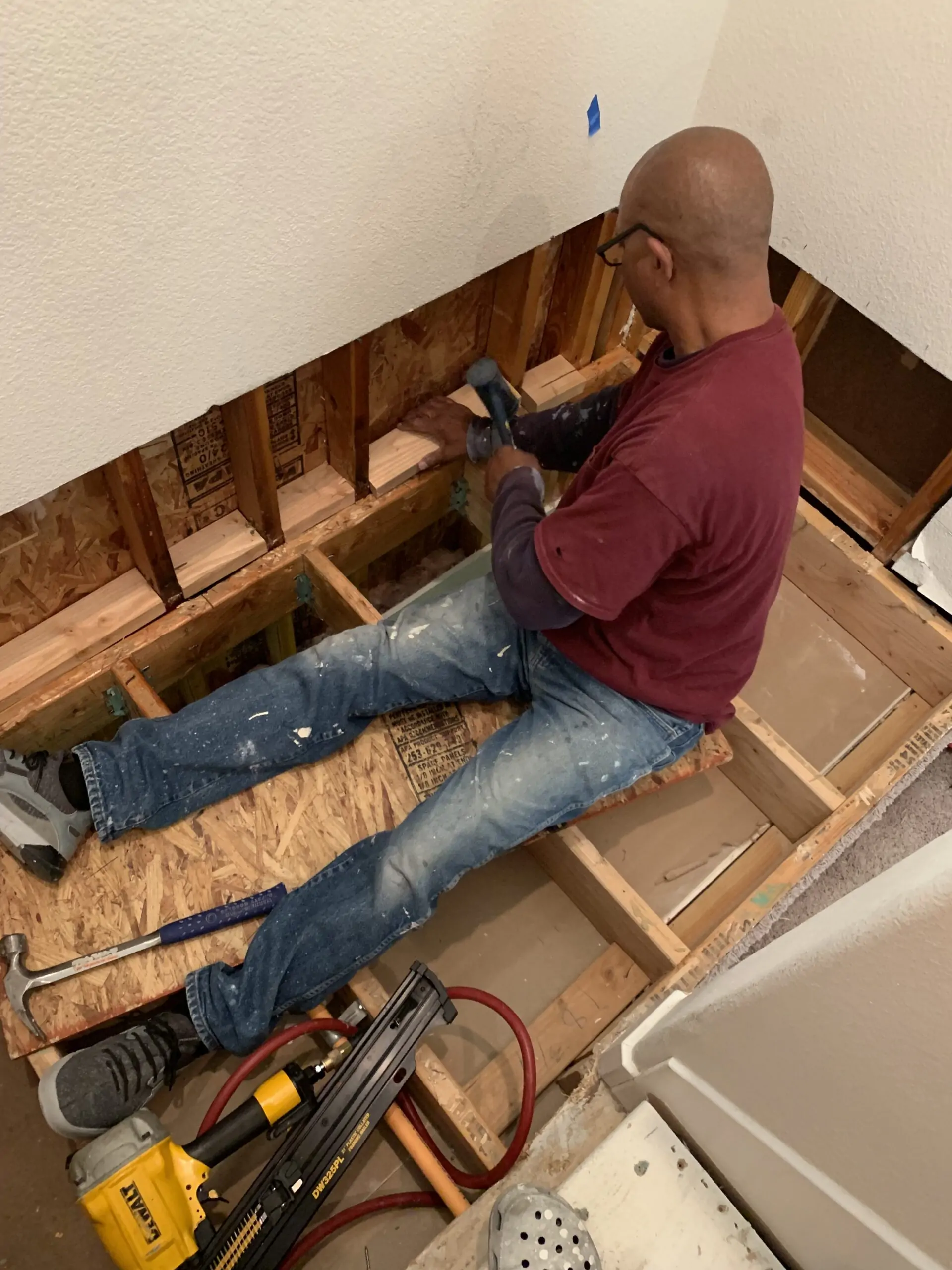
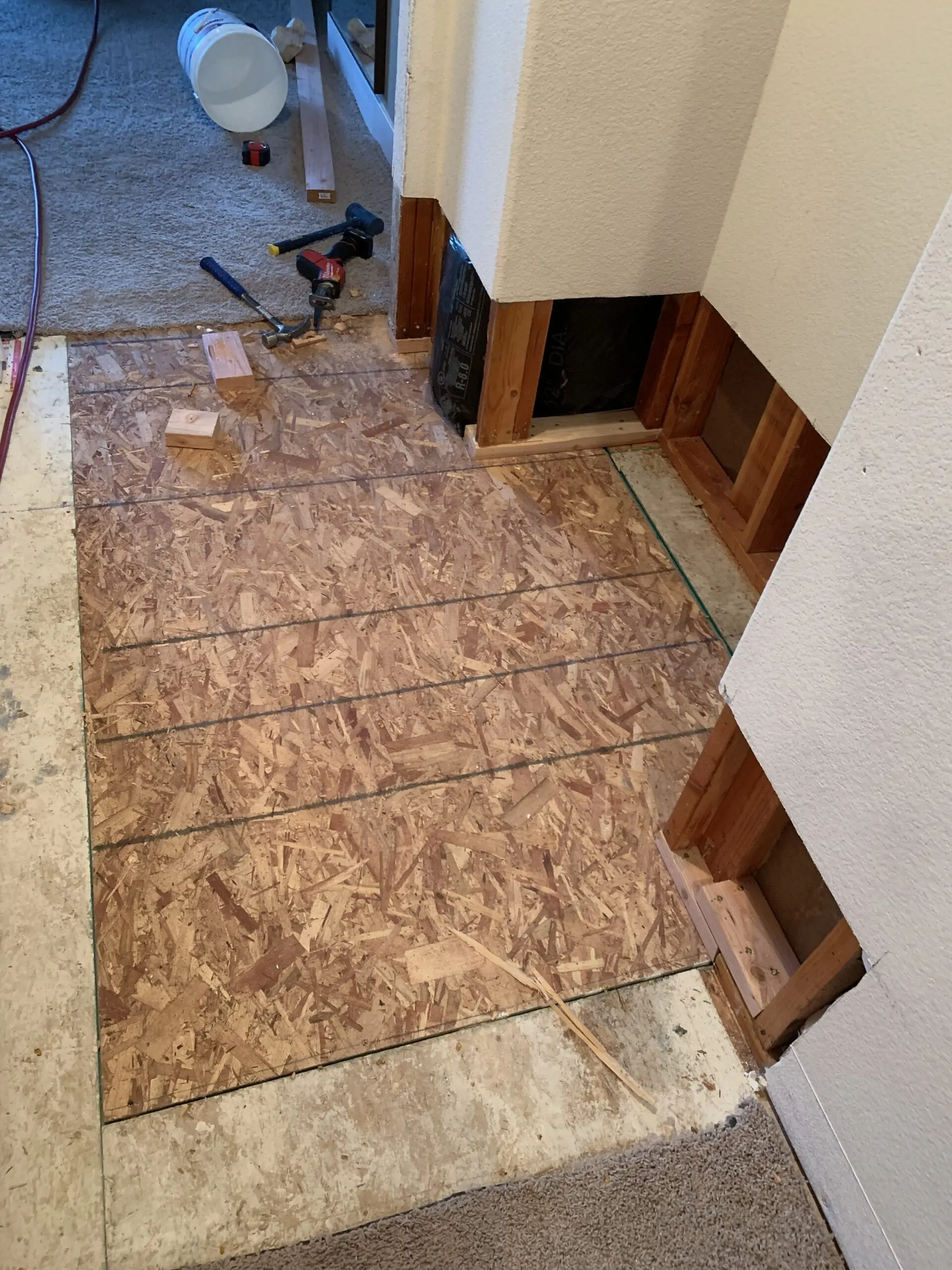
When urine has penetrated through an upper-level subfloor, access may be required from above, below, or both, depending on the affected materials and the construction of the home. The inspection determines the least invasive way to expose and treat the contaminated structure.
When odor has reached joists and ceiling materials, those contaminated structural surfaces need to be exposed, dried, prepared, and treated directly. Surface cleaning above will not reach contamination that has penetrated into the structure. For contamination that stays within the floor itself, see our subfloor odor treatment.
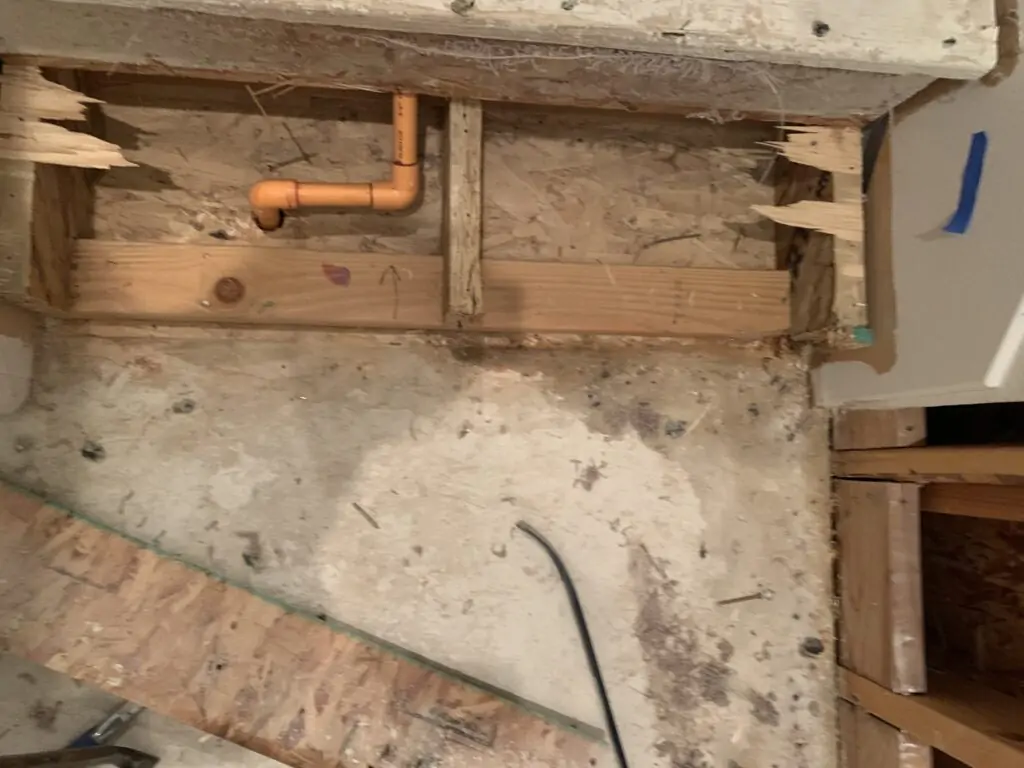
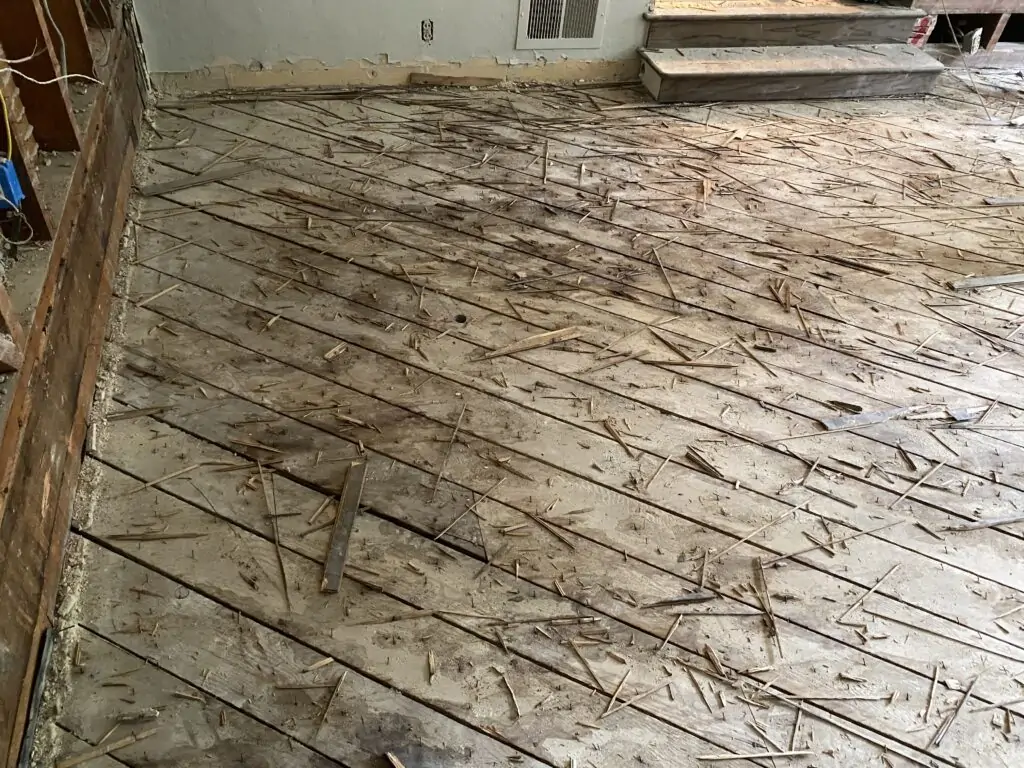
The inspection maps urine on floors, walls, door jambs, and below — before any work is recommended.
Dog urine odor and dog body odor are two separate issues, and they’re often confused.
Body odor transfers to walls and surfaces where dogs rub against them — hallways, corners, doorways, the walls beside a dog’s favorite spot. The oils build up over time. In some homes the body odor is actually stronger than any urine odor.
It explains a common situation: the urine has been dealt with, the carpet was replaced, and the house still smells like dog. That smell is in the walls, not the floor.
Where body odor collects:
How it’s treated. Body odor is treated differently from urine. Depending on the surface and severity, treatment may involve thorough cleaning, surface preparation, and treatment of the affected material. If odor has penetrated into porous or structural materials, additional remediation may be required. Where a wall surface is contaminated beyond what cleaning and preparation will resolve, we inspect whether the drywall itself needs to be treated or partially removed.
That’s why the inspection matters — we identify whether you have urine odor, body odor, or both before recommending anything. Treating one when the problem is the other doesn’t work.
When dog urine has soaked through the carpet, cleaning is working on the wrong layer. Carpet cleaning is the right tool for surface soiling — it isn’t built to reach urine that has gone into the pad, subfloor, jambs, or wall.
Replacing the carpet isn’t the answer either. New carpet over a contaminated subfloor puts the odor right back into the room. If there’s already noticeable urine odor in the house, deal with the source before the flooring company installs anything new.
Heavy or repeated liquid treatment — enzyme products, vinegar, hydrogen peroxide, deodorizers — can introduce additional moisture into carpet, padding, subfloor, and surrounding materials, which can complicate remediation. Each of those products has its place on fresh, surface-level accidents. Once the contamination is below the surface, more liquid doesn’t reach it.
This is the most expensive mistake we see on dog urine jobs.
New flooring over a contaminated subfloor doesn’t remove the odor — it covers it for a while. Eventually the odor works its way back into the living space, and the new flooring can absorb it too.
At that point the only fix is to pull the new flooring back up to reach the source. Some of it gets damaged coming out and has to be replaced. You pay for the flooring twice, plus the remediation.
On a rental it’s worse. The new tenant has to move furniture back out and live around the work — or the unit sits empty while it’s done.
Find the source, treat it, then install.
Tenant dog damage usually shows up at turnover: carpet comes up and the subfloor underneath is stained, the baseboards are swollen, and the door jambs are discolored at the bottom.
What matters at that point is scope. How much has to come out, how much can be treated, and how long the unit is off the market. The inspection answers those questions and produces an itemized estimate — the documentation you need for the deposit and for planning the turnover.
Treating it properly once is almost always cheaper than re-carpeting a unit twice.
If you notice dog urine odor, dog body odor, or a house heavily scented with candles and air fresheners, get a pet odor inspection before you buy. Masking is common before a showing. The inspection tells you the actual scope — and the cost — while you can still negotiate.
Buyers notice dog odor within seconds of walking in, and it becomes a price negotiation. Dealing with it before listing lets you control the scope and cost, instead of negotiating against a buyer’s estimate.
Every job starts with a pet odor inspection, then moves through these steps:
Our 5-Year Odor-Free Guarantee applies to qualifying structural surfaces that are properly exposed, prepared, and treated with the Odor Encapsulator System. If the original pet urine odor returns from those treated surfaces due to the same contamination we remediated, we return and re-treat at no additional charge during the guarantee period.
It doesn’t cover new pet accidents, untreated areas, concealed materials the customer elected not to expose, or work performed by others.
Either the subfloor underneath is still contaminated, or the odor is dog body odor in the walls rather than urine in the floor. The inspection tells you which.
Yes. Urine on a door jamb runs down into the jamb base, the drywall behind the baseboard, and the subfloor below. It’s one of the most commonly missed sources of dog odor. Contaminated jambs are removed as needed so we can treat the framing, drywall, and subfloor around them; replacement is handled by your contractor.
On second floors, yes. Enough volume over enough time can go through the subfloor and into the ceiling of the room underneath.
Urine odor comes from urine absorbed into floors, walls, and structure. Body odor comes from oils transferred to walls and surfaces where the dog rubs against them. They’re treated differently.
Carpet cleaning works on the carpet. Once urine has soaked into the pad, subfloor, jambs, or walls, the source is somewhere cleaning doesn’t reach.
If they’re swollen, stained, or the inspection shows urine behind them, usually yes — both to treat the drywall and subfloor underneath and because saturated baseboards hold odor themselves.
No. We remove contaminated material and treat the structure. Your flooring contractor installs afterward.
Qualifying structural surfaces properly exposed, prepared, and treated with the Odor Encapsulator System, for five years, against the return of the original contamination we remediated. Not new accidents, untreated areas, or concealed materials the customer chose not to expose.
Dog odor that survives cleaning is coming from somewhere cleaning didn’t reach — the subfloor, the door jambs, the walls, or below. An inspection finds it and tells you what it will take to eliminate it.
Serving California since 1989·5-Year Odor-Free Guarantee on treated surfaces